
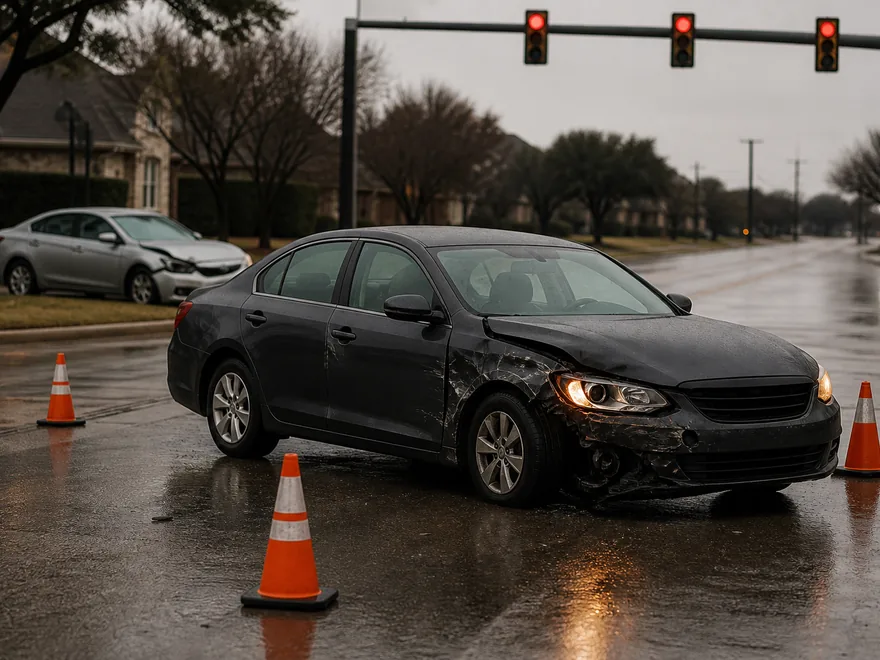
Car Accidents
Most injury calls that reach this office start with an ordinary drive — a rear-end hit in stopped traffic on I‑20, a left-turn collision at Cooper and Arkansas, a sideswipe on the merge onto SH‑360. What decides those claims is rarely the crash itself. It is whether anyone preserved the 911 audio, the signal timing, the body-shop estimate, and the first medical note before the other driver’s adjuster finished building the file their way. We take the call, get that evidence locked down, and place the claim with an attorney who tries collision cases in Tarrant County courts.
01 How long do I have to file a car accident claim in Texas?
Two years from the date of the wreck for most injury claims, under Texas Civil Practice and Remedies Code §16.003. Much shorter deadlines apply when a city, county, transit authority, or state vehicle is involved — formal notice can be due in six months or less. Those deadlines are unforgiving, so the safer move is having someone look at the claim in the first few weeks rather than in the final month.
02 The other driver’s insurer already called me. Should I give a statement?
Not before you have talked to a lawyer. A recorded statement is taken to lock you into one version of events while you are still sore, possibly medicated, and still guessing about the full extent of your injuries. You are under no obligation to give one to the other driver’s carrier. You generally do owe cooperation to your own insurer — and even that should be a short, factual conversation.
03 What if the driver who hit me had no insurance?
The claim usually shifts to your own uninsured and underinsured motorist coverage. Texas insurers must offer UM/UIM, and plenty of drivers carry it without realizing. Be aware that these claims turn adversarial in practice, because your own carrier steps into the shoes of the driver who hit you. That is exactly why they are worth having counsel on.