Behind on your mortgage? A Texas foreclosure can move in weeks — Chapter 13 can stop it. See how →
Drowning in card & medical debt? Chapter 7 can wipe qualifying unsecured debt — a true fresh start. See how →
Want to keep the house & car? Chapter 13 catches up arrears on a structured, court-protected plan. See how →
SBA loan in default? North Texas business owners — there are defenses and workouts. See how →

Personal Injury · Arlington & Fort Worth

Injured in Arlington or Fort Worth? Start with a straight answer.

Hurt in a wreck, a fall, or on the job? Call the Arlington office and tell us what happened. We review your Arlington or Fort Worth injury claim at no charge, take on the insurance company, and keep the medical bills and collection pressure off your back while the case runs. One call covers both.

Personal injury · Tarrant County

Seven kinds of claims. One phone call.

Below is what gets looked at in each type of case, what usually decides it, and the questions people actually ask. Every case type starts the same way: a free review of what happened, and a straight answer about whether you have a claim worth bringing.

  • Free case review — usually the same day you call
  • No up-front cost — Texas injury cases are handled on a contingency fee
  • Two years to file most Texas injury claims (Tex. Civ. Prac. & Rem. Code §16.003) — far less against a government vehicle
  • Arlington office at 1521 N. Cooper St., Suite 340 — Tarrant County courts
  • Garnishment, collection suits, and foreclosure handled here directly while your claim runs

What you get on the first call

A trial lawyer who does this every day.

The first hours after a wreck or a fall decide more than most people realise, so that is where the work starts: an honest read on whether you have a claim, and the evidence locked down before it disappears — the scene, the vehicle, the incident report, the treatment records. From there we deal with the adjuster and the paperwork while you deal with getting better. And you get the one thing most injury offices will not do for you — Daniel Wright handles the creditors, the garnishment, and the foreclosure notice that will not wait a year for your settlement. One call covers the claim and the money pressure behind it.

“The worst outcome I see is someone who had a real claim and a real debt problem, and got help with neither because they were too embarrassed to call anybody. One conversation sorts out which one you actually have.”

Daniel Wright · Lead Attorney
Daniel Wright, lead attorney at Machi Wright & Associates in Arlington, Texas
Injury claims, debt, garnishment, and foreclosure — handled from the Arlington office.

Case types

What we look at, case by case.

Seven kinds of injury claim, each with the detail that tends to decide it in Arlington and Fort Worth — and the three questions people ask most.

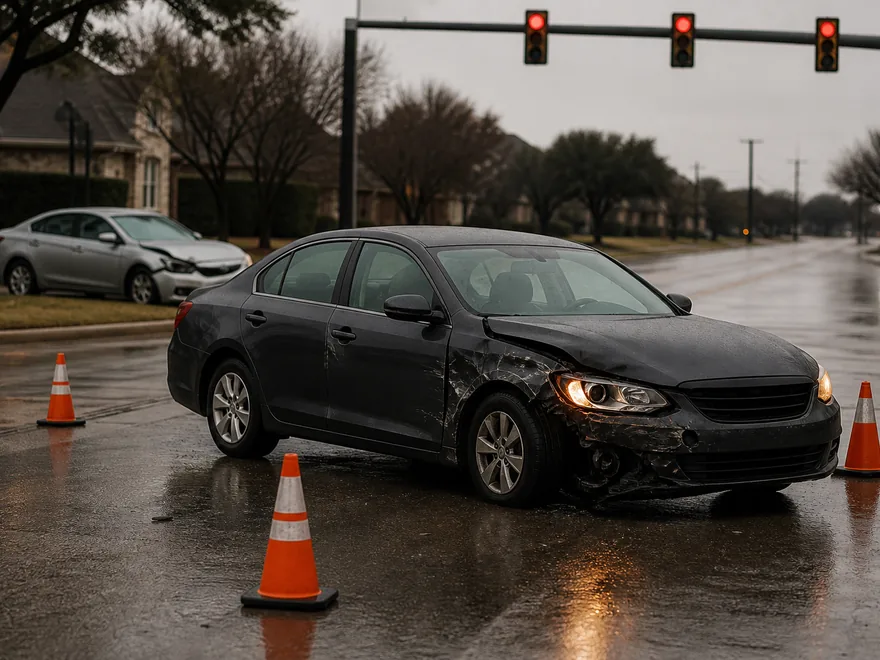
Damaged car angled across a wet suburban Arlington intersection after a collision, traffic cones placed around it

Car Accidents

Most injury calls that reach this office start with an ordinary drive — a rear-end hit in stopped traffic on I‑20, a left-turn collision at Cooper and Arkansas, a sideswipe on the merge onto SH‑360. What decides those claims is rarely the crash itself. It is whether anyone preserved the 911 audio, the signal timing, the body-shop estimate, and the first medical note before the other driver’s adjuster finished building the file their way. We take the call, get that evidence locked down, and place the claim with an attorney who tries collision cases in Tarrant County courts.

01 How long do I have to file a car accident claim in Texas?

Two years from the date of the wreck for most injury claims, under Texas Civil Practice and Remedies Code §16.003. Much shorter deadlines apply when a city, county, transit authority, or state vehicle is involved — formal notice can be due in six months or less. Those deadlines are unforgiving, so the safer move is having someone look at the claim in the first few weeks rather than in the final month.

02 The other driver’s insurer already called me. Should I give a statement?

Not before you have talked to a lawyer. A recorded statement is taken to lock you into one version of events while you are still sore, possibly medicated, and still guessing about the full extent of your injuries. You are under no obligation to give one to the other driver’s carrier. You generally do owe cooperation to your own insurer — and even that should be a short, factual conversation.

03 What if the driver who hit me had no insurance?

The claim usually shifts to your own uninsured and underinsured motorist coverage. Texas insurers must offer UM/UIM, and plenty of drivers carry it without realizing. Be aware that these claims turn adversarial in practice, because your own carrier steps into the shoes of the driver who hit you. That is exactly why they are worth having counsel on.


Free review of aCar Accidents claim

Loaded 18-wheeler semi truck photographed from a low angle on a Fort Worth interstate under an overcast sky

Truck & 18-Wheeler Accidents

Freight runs through Tarrant County without pause — I‑35W north toward the Alliance corridor, I‑20 across the south side, I‑30 into Dallas — and a loaded tractor-trailer strikes with something like twenty times the mass of the car next to it. These are not simply large car wrecks. They bring in federal motor carrier regulations, driver logs and engine data that can be overwritten within weeks, a carrier rapid-response team that is often on scene the same day, and frequently several responsible parties: the driver, the motor carrier, the broker, the outfit that loaded the trailer. Preservation demands need to go out immediately, which is why a same-day call matters more in a truck case than almost anywhere else.

04 Who can be held responsible in an 18-wheeler wreck?

Often more than one party. Past the driver, responsibility can reach the motor carrier for its hiring, training, or scheduling decisions, the company that loaded and secured the freight, a maintenance contractor, or a component manufacturer. Identifying each of them early matters, because they frequently carry separate policies and separate limits.

05 Why does evidence disappear so quickly in truck cases?

Electronic logging devices, engine control module data, dash cameras, and dispatch messaging all sit on retention schedules measured in weeks or months, and federal rules only require carriers to hold some categories of record for six months. Once a preservation letter is served, the carrier has a duty not to destroy those materials. Until it is served, routine deletion is perfectly legal.

06 The trucking company offered to pay for my vehicle right away. Is that a problem?

Property damage and bodily injury are separate claims, and a quick property payment is normal. The risk sits in the paperwork: a release drafted to cover “all claims” can quietly end the injury case for the price of a bumper. Read anything before you sign it, and have someone else read it too.

Free review of aTruck & 18-Wheeler Accidents claim

Empty wooden chair with a folded quilt beside a sunlit window in a quiet North Texas family home

Wrongful Death

When a crash, a fall, or a preventable medical error kills someone, Texas gives particular family members a claim of their own. Under Texas Civil Practice and Remedies Code §§71.001–71.012, a surviving spouse, the children, and the parents may bring a wrongful death action, while the estate may separately bring a survival claim for what the person went through before death. There is also a practical side that nobody warns families about: funeral costs, a vanished paycheck, and often a mortgage all land in the same month. That overlap is a common reason families end up at a bankruptcy office first — and it means both halves of the problem can be addressed from one conversation.

07 Who is allowed to file a wrongful death claim in Texas?

A surviving spouse, the children including adult children, and the parents of the person who died. Siblings cannot bring the claim, and neither can other relatives regardless of how close they were. If no eligible family member has filed within three months of the death, the executor or administrator of the estate may file, unless the family asks them not to.

08 What can a wrongful death claim recover?

The financial support and lost earning capacity the family would have received, lost companionship and society, the mental anguish of the surviving family members, and funeral and burial costs. Where the conduct was grossly negligent, exemplary damages may also be available. The estate’s separate survival claim covers the medical expenses and the conscious pain the person experienced before death.

09 We have fallen behind on bills since the death. Does that hurt the claim?

It does not reduce the claim, but it does change the order things should be handled in. Creditors do not pause for a death, and a wrongful death recovery can be a year or more away. That gap is a debt problem with its own set of tools, and it is the part of the picture this office handles directly.

Free review of aWrongful Death claim

Yellow caution sign standing beside a spreading liquid spill on a polished store floor between grocery aisles

Premises Liability & Slip and Fall

A Texas property owner owes a duty that scales with the reason you were there: an invited customer at an Arlington grocery store is owed considerably more than a trespasser. In practice these cases turn almost entirely on notice — did the business know, or should it reasonably have known, about the spill, the cracked tread, the burned-out stairwell light, the loose handrail? That proof lives in incident reports, sweep logs, work orders, and camera footage that overwrites itself within days. A slip-and-fall claim is very often won or lost in the first week.

10 Is the store automatically liable because I fell there?

No. Texas requires proof that a dangerous condition existed, that the owner knew or reasonably should have known about it, that it failed either to fix the hazard or warn you, and that the condition actually caused your injury. A fall by itself establishes none of those, which is why anything documented on the day it happened carries so much weight.

11 What should I do before I leave the property?

Report it to a manager and ask that a written incident report be created. Photograph the hazard itself and the area around it, including the absence of any warning cone. Collect the names of employees present and of any witness. Then get evaluated medically even if you feel well enough to drive home, because soft-tissue and head injuries commonly present the following day.

12 Does an apartment complex count?

Yes, and landlord claims are common across Arlington and Fort Worth: unlit stairwells, failed gate or lock systems, deteriorated walkways, balcony railings, and pool areas. Lease terms and Texas Property Code duties both come into play, and a maintenance complaint put in writing before the injury can be decisive.

Free review of aPremises Liability & Slip and Fall claim

Worn white hard hat and heavy work gloves resting on stacked steel beams inside a Tarrant County warehouse work zone

Workplace & Industrial Injuries

Texas is the only state that does not require private employers to carry workers’ compensation, and that single fact drives the entire analysis. If your employer subscribes, you are generally inside the comp system — limited benefits, and no negligence suit against the employer. If your employer is a non-subscriber, which is common among the warehouses, distribution centers, staffing agencies, and construction outfits across Tarrant County, you may be able to sue directly for negligence, and the employer loses most of its traditional defenses. Which side of that line your job falls on is the first thing worth finding out.

13 How do I find out whether my employer carries workers’ compensation?

Employers who subscribe are required to notify employees in writing, and the Texas Department of Insurance Division of Workers’ Compensation keeps coverage records that can be checked directly. Do not rely on what a supervisor says in the hallway. Coverage status changes the shape of the entire claim, so it should be confirmed against the record.

14 Can I be fired for reporting a workplace injury?

Retaliating against an employee for filing a workers’ compensation claim in good faith is prohibited, and a retaliation claim stands separately from the injury claim itself. Employees of non-subscriber employers have fewer statutory protections, which is a good reason to report the injury in writing and keep your own dated copy.

15 What if a contractor or another company caused my injury?

Then a third-party claim may exist even if you are inside the comp system. On multi-employer sites — a general contractor, several subcontractors, an equipment lessor — the negligent party is frequently not your own employer, and that claim is not capped by comp benefits.

Free review of aWorkplace & Industrial Injuries claim

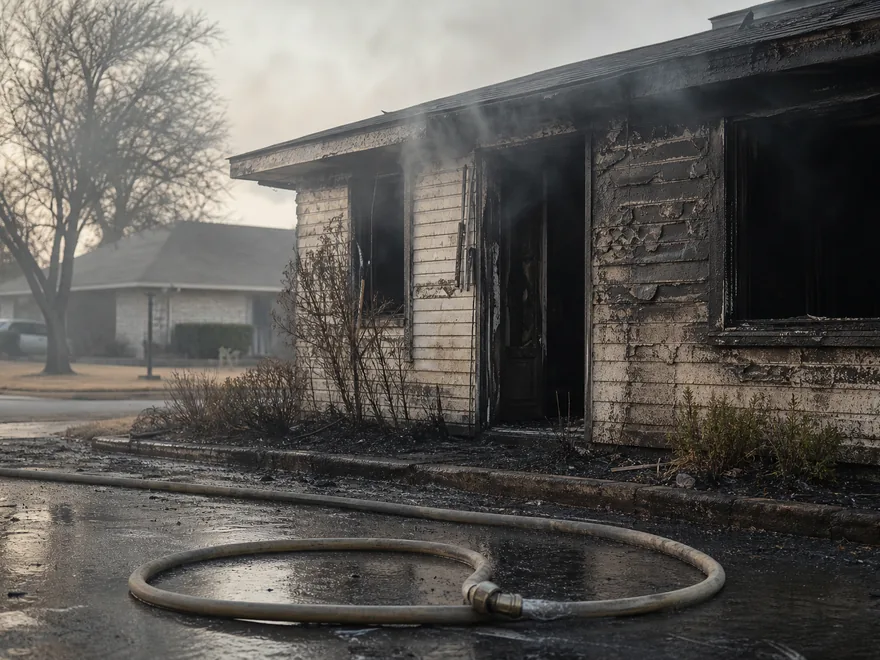
Soot-blackened exterior and scorched window frames of a suburban Texas house after a structure fire, fire hose coiled on wet pavement

Burn Injuries

Burns get treated as their own category because both the medicine and the money behave differently. Grafting, staged reconstruction, infection risk, permanent scarring, and long-term pain management mean the true cost is not knowable for months, and settling early nearly guarantees that future treatment goes unpaid. Around Arlington and Fort Worth the causes we see most are apartment fires traced back to wiring or missing detectors, water heater and gas failures, industrial flash burns, chemical exposure, and vehicle fires following a collision. Establishing what actually caused the fire usually requires an origin-and-cause expert on site before the scene is cleared.

16 My apartment fire was called an accident. Is there still a claim?

Possibly. “Accidental” in a fire marshal’s report describes how the fire ignited, not who is legally responsible for it. Claims commonly arise from deferred electrical repairs, non-functioning smoke detectors, blocked exits, or a defective appliance. An independent origin-and-cause investigation often reaches conclusions the initial report never addressed.

17 Should I settle while I am still in treatment?

Generally no. Burn treatment is staged, and the surgeries that drive the real cost frequently come well after the initial recovery. A settlement signed before you reach maximum medical improvement closes the claim at a number that was set before anyone knew the true total.

18 Is my renters or homeowners claim the same as an injury claim?

No, and the two run on separate tracks. Your own policy covers property and displacement according to its contract terms and its own deadlines. An injury claim runs against whoever caused the fire. Pursuing the first does not substitute for the second, and statements made in one can resurface in the other.

Free review of aBurn Injuries claim

Empty hospital operating room after hours with a vacant surgical table beneath dimmed overhead surgical lights

Medical Malpractice

Medical malpractice is the most heavily gated injury claim in Texas, and being straight about that serves people better than encouragement does. A bad result is not malpractice. The claim requires proof that the provider fell below the accepted standard of care and that the failure is what caused the harm. Chapter 74 then stacks procedural hurdles on top: pre-suit notice with an authorization for records, and a written expert report served within 120 days of filing or the case is dismissed. Non-economic damages are capped at $250,000 per claimant against physicians, with separate caps for facilities. Because these cases are expensive to work up, they need honest early screening rather than optimism.

19 Is a bad outcome enough to bring a malpractice claim?

No. Medicine carries genuine risk, and serious complications occur without anyone having been negligent. The question is whether the care fell below what a reasonably prudent provider would have done in the same circumstances, and whether that particular failure caused the injury. Answering it takes a qualified physician reviewer, not a lay opinion.

20 What is the 120-day expert report, and why does it end cases?

Texas requires a claimant to serve an expert report addressing standard of care, breach, and causation within 120 days of filing suit. The requirement is strict and the deadline is enforced. A late or inadequate report results in dismissal and an award of the defendant’s attorney fees, which makes it the single most common reason a Texas malpractice case ends early.

21 How much time do I have to bring a malpractice claim?

Two years, generally measured from the negligent act or from the end of that course of treatment, subject to an outer limit of ten years. Modified rules apply to minors. Since the pre-suit notice and the expert report both take real time to assemble, a claim first brought to a lawyer around the twenty-month mark may already be too late to develop properly.

Free review of aMedical Malpractice claim

How it works

Four steps. No runaround.

01 · The call

You reach a person, not a screener. We take the facts of the wreck, the fall, or the treatment while they are still fresh.

02 · The screen

Liability, the filing deadline, what insurance is actually available, and whether the medical picture supports a claim worth bringing.

03 · The claim

We build it — liability evidence, medical records, the demand — and deal with the adjuster so you do not have to. Fee terms in writing before you sign anything.

04 · The gap

While the claim runs, we deal with the bills, the garnishment, or the foreclosure notice that will not wait a year for a settlement.

Before you call

Who represents you, and what it costs

The three questions worth answering before anything else.

(817) 335-8880
01 Who will be handling my injury case?

An attorney reviews your case personally and stays responsible for it. You will not be handed to a screener or a case manager who checks in once a month. We look at whether there is a claim worth pursuing, preserve the evidence while it still exists, handle the adjusters and the paperwork, and keep you told what is happening. If the claim is not worth bringing, you get told that plainly rather than signed up.

02 Does it cost anything to have my injury claim reviewed?

No. The review is free and there is no obligation. Texas injury cases are customarily handled on a contingency fee, meaning the attorney’s fee comes out of any recovery rather than out of your pocket up front — and if there is no recovery, there is no fee. All fee terms are given to you in writing before you agree to anything.

03 Why would a bankruptcy firm be the first call after an accident?

Because a serious injury is usually a money emergency well before it is a lawsuit. Wages stop, medical bills arrive, and collectors keep calling while an injury claim takes a year or more to resolve. Most injury offices do nothing at all about that gap. Here you get both sides handled — the claim itself, plus the garnishments, collection suits, foreclosure timelines, and Chapter 7 or Chapter 13 relief that keep one bad month from turning into a permanent loss.

20+Years practicing
FreeCase review
2 yrsTexas injury deadline
NTXTarrant County courts

Free case review

Tell us what happened. We’ll tell you where it goes.

An attorney reviews every request. Tell us what happened and you will get a straight answer on whether the claim is worth pursuing — and if the real problem is the debt stacking up behind it, that is handled right here too. Call (817) 335-8880 · Se habla español.

Request a Free Case Review

Or call now(817) 335-8880

Injury cases are handled on a contingency fee — all fee terms are provided to you in writing before you retain the firm. This page is general information, not legal advice, and contacting the firm does not create an attorney–client relationship. Prior results do not guarantee a similar outcome.

Free · Confidential · No obligation

Request a free consultation

Tell us about the debt, the garnishment, or the sale date. An attorney reviews every request — spam and bots are filtered before anything reaches the firm.

(817) 335-8880

Prefer to talk it through? Call the Arlington office — consultations are free and confidential.

1521 N. Cooper St., Suite 340 · Arlington, TX 76011

Free, confidential consultation. Submitting the form does not create an attorney-client relationship.